




Robinhood election markets stand out for their deep liquidity and wide coverage of U.S. politics. So, it’s really no surprise that so many people want to know how they work and how to get started as quickly as possible.
And that’s exactly where I come in. In this review, I’ll break down everything you should know about Robinhood election markets, from how event contracts work to how you can use the platform. Once I’ve covered the basics, I’ll share some tips to help you trade like a pro, so be sure to stick around for that.
All about Robinhood election markets
When you first land on the Robinhood prediction markets app, you’ll notice it’s well organized, with all market categories clearly outlined at the top of the page. I like this setup because even beginners can navigate to the election markets and filter by state without any hassle. Some of the featured states include California, Michigan, Washington, Virginia, and Florida, but there’s also an International section, giving you enough options to stay engaged.
Typically, how this works is, you filter by state or head to the International section and click on the event contract that interests you the most. You’ll notice that contract prices range from $0.01 to $0.99, with each price representing the market’s estimated probability of an outcome. If you buy a Yes contract at say $0.65, and your prediction turns out to be correct, you’ll receive $1, giving you a profit of $0.35 per contract.
However, if your prediction is incorrect, you’ll receive $0.00 per contract, meaning you’ll lose the amount you paid for it. That’s basically how it works, and as you can see, everything is pretty straightforward. While exploring Robinhood election markets, I came across contracts covering events like:
| Los Angeles Mayor winner? | Florida republican governor nominee? | Brazil presidential election winner? |
|---|---|---|
| Karen Bass - 61¢ | Byron Donalds - 95.2¢ | Luiz Inácio Lula da Silva - 63¢ |
| Nithya Raman - 38¢ | James Fishback - 4.3¢ | Flávio Bolsonaro - 25¢ |
These may not be the exact contracts you’ll find by the time you start trading, but you get the idea. Generally, the secret to making correct predictions is to focus on familiar contracts, instead of trying to predict every election across the board. I’ll share more of my dos and don’ts for Robinhood election markets a little later, but first, let’s look at exactly how you can get started.
Setting up an account and predicting on Robinhood election markets
Here, I’ll walk you through exactly how I got started with Robinhood election markets. Thankfully, the whole setup process was super easy, and all I had to do was follow the on-screen prompts:
- Visit Robinhood’s official website using the links on this page.
- Click the Sign Up button at the top of the website, and you’ll be redirected to a page where you’ll need to select your location.
- Once done, enter your basic details, including your email address, password, and residential address.
- Agree to the terms and conditions, then submit the registration form.
- You may also need to verify your email address and phone number before you can start trading.
- Once your account is ready, log in and select the Elections market at the top of the screen.
- Next, filter the available contracts by state, or go to the International section to trade on geopolitics prediction markets.
- Narrow down the contracts that interest you the most, and click on one to review the current prices and settlement rules.
- If everything looks good, buy your contract at the specified price and wait for the outcome to settle.
- If your prediction is correct, you’ll receive a $1 payout per contract, but if it’s incorrect, each contract pays out $0.
Top tips to maximize your experience with Robinhood election markets
By now, you can comfortably create an account and start trading on Robinhood’s election markets. But that’s only part of the journey, because the real battle comes down to making informed predictions and getting the most out of every trade.
It’s true that there’s no foolproof strategy that guarantees you’ll predict every outcome correctly. If there were, everyone would be minting money from prediction market sites. That being said, I’ve picked up a few practical tricks that helped me make smarter decisions, and I’ll gladly share them below:
📜 Read every contract’s rules carefully
Sure, reading through an event contract’s rules might not be the most interesting part of making a prediction. However, you should always make it the first step, because it’ll tell you exactly how a contract will settle, who’s eligible to participate, and whether there are special conditions to keep in mind.
For instance, I came across rules that barred members of the U.S. House of Representatives from trading in markets related to the Brazilian presidential election. Other rules to keep an eye out for include the expiration and settlement dates, so you can know when an outcome will be resolved and when you’ll receive a payout. While some of these rules are generally consistent across different contracts, some are unique to a specific event, so it's always a good idea to take a moment to review them before buying a contract.
🔄 Exit early in your favor
One thing I liked about Robinhood election markets is that they draw a lot of activity, especially during major election cycles such as presidential races. With this activity comes deep liquidity, making it easier to buy and sell contracts as market sentiment changes, even before the final resolution.
As such, if a contract moves in your favor and you’re happy with the profit you’ve already built up, you can easily sell your position early and lock in those profits. The same applies when a trade isn’t going your way, where, instead of holding on and hoping things change, you can exit early to limit your losses. This is one of the most effective strategies in using prediction market apps, since it makes trading more flexible rather than an all-or-nothing situation.
💰 Stay aware of the fees
Even though Robinhood’s pricing is just as straightforward as its contract rules, you should still pay attention to the fees when trading. That’s because every contract comes with a fixed charge that might seem small on its own, but can add up with time, especially if you trade frequently.
The standard fee is around $0.02 per contract, split between a 0.01 commission for Robinhood and a 0.01 exchange fee, which is usually charged via Kalshi. So, for example, if you buy a Yes contract for $0.32, the total cost might come up to $0.34 when you include the fee. Other than this small Robinhood prediction market fee, it’s also worth checking whether your preferred payment method comes with any transaction fees, particularly if you’re using a credit or debit card.
🔍 Stick to familiar markets
One thing’s for sure, many of Robinhood election markets look very interesting, which is why it can be tempting to jump into every contract you encounter. It’s very important to resist this urge, and instead take a moment to weigh your options and focus on the races you actually understand.
Whether it’s the gubernatorial races, presidential elections, or even international politics, having some background information will make it easier to interpret market sentiment. It also helps to keep up with opinion polls, campaign developments, and both local and international news, as these can heavily influence how the contract prices move. Simply put, if you want to succeed in these types of markets, never put yourself in a position where you’re buying and selling based on random guesses.
⏳ Be patient with price movements
Robinhood election markets can shift quickly as new polls, debates, or breaking news hit the headlines. Based on my experience, though, I’ve learnt that not every price movement is worth reacting to.
Instead of chasing every price shift, take a moment to consider why the market sentiment moved before you exit your position. This patience will help you decide whether the new information changes your prediction, or if it’s better to stick with your original position until the outcome is resolved.
Stay ahead of the others with Robinhood
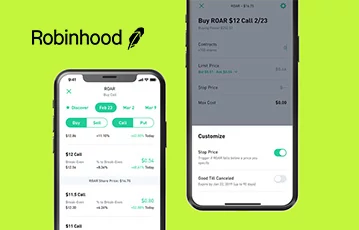
Make Robinhood predictions easily on mobile
Resolving any lingering questions you might have
If you’ve made it this far, you should have a good idea of what to expect from Robinhood election markets, from creating an account to placing your first trade. Even so, it’s completely normal to still have a few questions before getting started, which is why I’ve answered some of the ones I think come up most often below:
What are Robinhood election markets?
In a nutshell, Robinhood election markets let you predict the outcome of political events like presidential elections, gubernatorial races, or any other major elections. You can make these predictions by buying Yes or No contracts, with each contract’s price reflecting the market’s estimated probability of an event happening.
If your prediction is correct, the contract settles at $1, and your profit is the difference between the original price and that $1 payout. However, if you make an incorrect prediction, each contract settles at $0.
Do I need to verify my account before trading on Robinhood election markets?
Yes, in most cases, you’ll need to verify your account before you can trade on Robinhood election markets. Typically, this process includes confirming your email address or entering a verification code sent to your phone via SMS. At the same time, Robinhood might also ask you to submit a copy of your ID and proof of address, such as a utility bill, and this is done to confirm your identity, age, and location eligibility.
Can I sell my contracts before Robinhood election markets settle?
Yes! This is one of the features I liked most about Robinhood election markets, since you don’t have to hold every contract until the outcome settles. If market prices move in your favor, you can sell your contracts early and lock in the profit you’ve already built up. Likewise, if things aren’t going your way, you can exit your position before the final outcome settles and limit your losses.
Are there fees attached to Robinhood election markets?
Yes, Robinhood charges a small fixed fee of $0.02 per contract. This is usually split between a $0.01 commission charged by Robinhood itself and a $0.01 exchange fee, which is charged through Kalshi.
For more context, Kalshi charges an exchange fee because it powers Robinhood’s election markets behind the scenes. All in all, the total fee feels small, but it can always add up significantly, which is why you should always include it when deciding whether a trade is worth placing.
Are Robinhood election markets good for beginners?
Yes. In my opinion, all of Robinhood’s markets, be it election, culture, or even Robinhood sports contracts, are beginner-friendly. That’s because Robinhood is easy to navigate, every event contract clearly explains the outcome it’s tracking, and the prices are completely transparent. That being said, I always recommend starting with markets that you’re already familiar with and taking time to read each contract’s rules, at least for the first few weeks of trading.
Pros and cons of Robinhood election markets
Robinhood election markets are just the type of prediction markets I can confidently recommend to both new and experienced traders. However, it’s very important to understand both their benefits and potential drawbacks before creating an account and placing your first trade:
- Easy to get started
- 100% safe and secure
- Can exit before final resolution
- Account verification could take some time
Robinhood election markets are simple and still exciting
Simply put, Robinhood election markets provide the perfect way for traders to predict the results of different political events and election races. Usually, you’ll find a question such as ‘Next governor of California?’, and you can buy a Yes or No contract depending on your prediction. The contract prices depend on the overall market sentiment, so you can use them as a guide to show you what many traders expect to happen.
When you make a correct prediction, each winning contract settles at $1, while incorrect predictions pay out $0 per contract. However, in cases where there’s deep market liquidity, you can sell your contract before final resolution and lock in profits or cut your losses. Just remember that Robinhood charges a fixed $0.02 trading fee per contract, so always factor this cost in when making your trading decisions.
All in all, though, I found the process of buying and selling contracts on Robinhood election markets to be as easy as pie. If you’re ready to give them a try, all that’s left to do is create and verify your account, and you can do this by following the links on this page.
FAQs about Robinhood election markets
Are Robinhood election markets safe?
Yes, Robinhood election markets are safe and completely legal. Robinhood itself operates under the oversight of the Commodity Futures Trading Commission, which ensures that the platform adheres to the law and provides high standards of user protection. As such, Robinhood only offers election event contracts in eligible areas and requires traders to meet its eligibility requirements before getting started.
What’s the minimum amount I can use on Robinhood election markets?
Well, the answer to this question depends on the price of the contract you want to buy. However, because contract prices usually range between $0.01 to $0.99, you can often get started with just a few dollars. Just remember that in every contract you purchase on Robinhood’s election markets, you’ll also pay a fixed $0.02 fee.
How are the contract prices in Robinhood election markets determined?
The contract prices in Robinhood’s election markets are determined by the overall market sentiment. As traders buy and sell Yes and No contracts, prices adjust to reflect their current estimate of the probability of an outcome happening. As a result, contract prices can change quite often, as new political debates, polls, and breaking news influence people’s predictions.
Can I trade on more than one Robinhood election market at once?
Yes, nothing is stopping you from buying and selling contracts on multiple Robinhood election markets at the same time. On the contrary, it’s smart to spread your trades across different predictions instead of putting all your money on one single contract. Of course, this should only be the case after you’ve done enough research on each market you want to join.
What happens to Robinhood election markets if an election is disrupted?
Robinhood election markets follow the rules outlined in each of its event contracts. So, if an election is delayed, disputed, or there’s any other disruption, the contract won’t settle until all its conditions are met. This is one of the main reasons I always recommend reading a contract’s rules before placing any trade and reaching out to customer support in case something isn’t clear enough.